Article
9 Best AI Lead Scoring Tools for Marketing Agencies (2026)
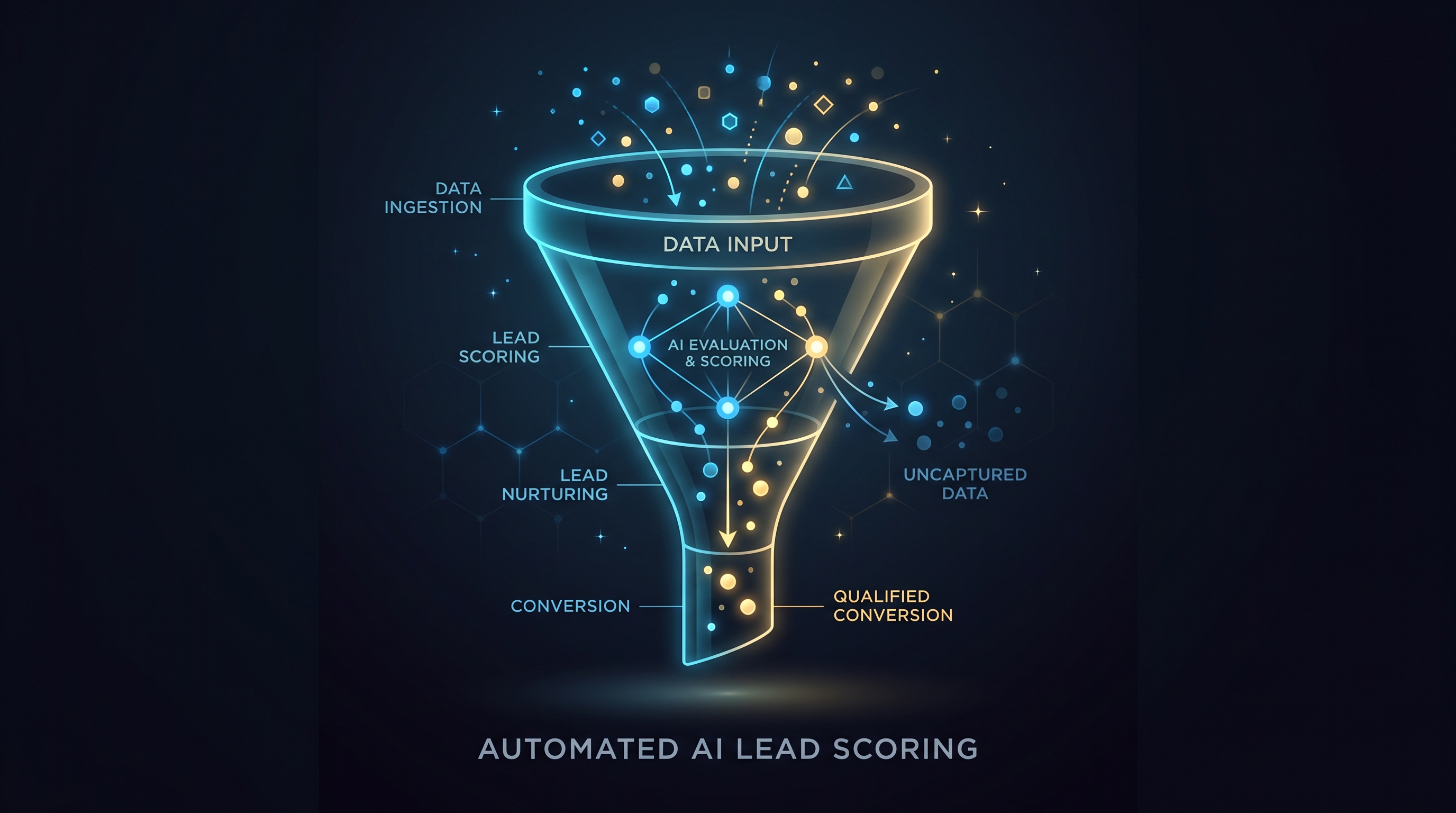
Scoring leads by hand is one of those tasks that looks manageable until it isn’t. An account manager opens the CRM, pulls the week’s new leads, cross-references campaign data, checks call notes if they exist, and assigns a priority. Multiply that by a dozen clients and it compounds fast. Most agencies running lead gen at scale lose somewhere around 12 hours a month to this work alone, and that’s before accounting for the time spent re-sorting when a client changes their definition of a qualified lead.
The problem isn’t that the team is slow. It’s that AI lead scoring is a task that was always better suited to a system than a person, and most agencies haven’t built that system yet.
Why Manual Lead Qualification Breaks at Scale
Manual scoring works when volume is low and signals are simple. It stops working when a single client is generating 200 leads a month from four different channels, each with different close rates, different average deal sizes, and different lead quality patterns.
The account manager doing the scoring is making judgment calls without complete information. They see the form fill. They might see the campaign source. They rarely have time to pull the call transcript, check the CRM history, or weight the lead against the client’s actual revenue data. The score they assign reflects what they had time to look at, not what the lead is actually worth.
That gap between what a manual score reflects and what a real revenue-potential score would reflect is where agencies lose the most. Sales teams chase the wrong leads. High-value leads sit in the queue because nothing flagged them. The client sees mixed results and the agency can’t explain why.
What AI Lead Scoring Actually Does
AI lead scoring replaces the manual judgment call with a system that runs on every lead, every time, without someone having to open a CRM tab.
The system pulls the signals that actually predict close probability: lead source, campaign, form data, call transcript content, CRM history, and whatever custom weights the client has defined based on their own revenue outcomes. It scores each lead against those inputs and writes the score back to the CRM automatically.
This isn’t a generic lead scoring model applied across clients. The scoring weights are built per client, on their data, reflecting what a qualified lead actually looks like in their pipeline. A home services client and a B2B SaaS client have completely different qualification criteria, and the system accounts for that.
The output is a scored, sorted lead queue that sales can work from without doing any of the sorting themselves. The 12 hours a month that went into manual qualification come back to the team.
The Data Inputs That Make Scoring Accurate
The quality of an AI lead scoring system depends entirely on the signals it has access to. A system built only on form data will score about as well as a manual review of the same form. The advantage comes from integrating signals that a human reviewer wouldn’t have time to process.
The three input categories that move the needle most:
-
CRM signals: lead source, campaign attribution, conversion history, deal stage velocity
-
Call and intake signals: transcript content, call duration, sentiment, objection patterns flagged by AI call analysis
-
Campaign signals: ad group, keyword, match type, cost per lead by source
When these inputs are stitched together and run through a scoring model calibrated to the client’s actual closed-won data, the score reflects real revenue potential, not a best guess based on what the AM had time to check.
Matz Analytics builds these scoring systems on the client’s existing CRM and call tracking infrastructure. Nothing is plug-and-play; the system is built on the actual data the agency already has.
How Scores Feed Into Reporting and Client Dashboards
Lead scoring doesn’t operate in isolation. The score is only useful if it flows into the places where decisions get made: the sales queue, the client dashboard, and the performance reports the agency sends every week.
When scoring is automated, the score becomes a live data field. It updates when new signals come in. It feeds into the client’s dashboard so they can see lead quality trends over time, not just volume. It becomes a variable in attribution reporting, so the agency can show which campaigns are generating high-scoring leads versus which are generating volume without quality.
This is where the hours compound. The 12 hours saved on manual scoring is one number. The additional time saved on report building, because the score data is already structured and flowing into the reporting pipeline, is another. Agencies that automate scoring and connect it to automated reporting typically see both lines move at the same time.
Matz Analytics builds the data pipeline that connects scoring outputs to client dashboards and automated reports, so the score doesn’t just live in the CRM. It becomes part of the operational infrastructure.
The 9 Tools Agencies Are Using for AI Lead Scoring in 2026
Several platforms have built AI lead scoring into their core product. What separates the ones worth using from the ones that add noise is whether the scoring model can be trained on the client’s own data, and whether the scores can be exported into the agency’s existing reporting stack.
HubSpot’s predictive lead scoring uses contact and behavioral data to assign scores automatically. It works well for agencies whose clients are already on HubSpot and have enough historical data to train the model.
Salesforce Einstein Scoring does the same inside the Salesforce ecosystem. The model improves over time as more closed-won and closed-lost data accumulates.
ActiveCampaign’s lead scoring is rules-based rather than predictive, but it’s configurable enough to handle complex qualification logic for agencies managing multiple client accounts.
Pipedrive’s AI-powered lead scoring surfaces deal probability scores based on pipeline activity and historical close rates. It’s lightweight and integrates cleanly with most reporting tools.
Zoho CRM’s Zia scoring engine pulls from behavioral and transactional data and can be customized per pipeline. Useful for agencies managing clients with non-standard sales cycles.
Marketo Engage offers predictive scoring built on demographic, firmographic, and behavioral signals. Better suited to B2B clients with longer sales cycles and richer contact data.
Leadfeeder (now Dealfront) scores inbound leads based on company-level behavioral data, particularly useful for B2B lead gen clients tracking anonymous website visitors.
Clearbit (now part of HubSpot) enriches lead records with firmographic and technographic data before scoring, which improves accuracy for clients where company fit is a primary qualification criterion.
Custom AI scoring systems built on the agency’s own CRM and call data, like what Matz Analytics builds, are the option that produces the most accurate scores for clients with sufficient historical data and specific qualification criteria that off-the-shelf models don’t capture.
Choosing the Right Approach for Your Agency
The right tool depends on what data the client already has and how specific their qualification criteria are. Agencies with clients on major CRM platforms and enough historical closed-won data should start with the native scoring tools in those platforms. They’re the fastest path to a working system.
For clients with complex qualification logic, multi-channel lead sources, or specific revenue-weighting criteria that a generic model won’t reflect, a custom-built scoring system on the client’s own data produces materially better results.
The measure isn’t which tool has the most features. It’s which system produces scores the sales team actually trusts, and whether those scores are flowing automatically into the places where the team makes decisions.
If a team is still opening the CRM every Monday to sort leads by hand, that is the exact work a properly built AI lead scoring system takes off the calendar.